
Best Instruments for Young Children at Every Age

A preschooler who happily bangs a rhythm on the table may not be ready for the same instrument as a quiet 7-year-old who sings every song in the car. The best instruments for young children are not simply the easiest ones to play. They are the instruments that suit a child’s physical development, attention span, personality, and willingness to keep trying when a new skill feels hard.
For parents, the goal is not to predict a child’s future career. It is to give them a positive start with music: one that feels enjoyable, builds confidence, and gradually teaches focus, listening, and discipline. A thoughtful first choice can make lessons something a child looks forward to each week rather than another activity they feel pressured to complete.
How to Choose the Best Instruments for Young Children
Age matters, but it should not make the decision on its own. Children develop at different rates. One 4-year-old may sit attentively through a short lesson and copy simple patterns, while another may learn best through movement, songs, and quick changes of activity.
Start by watching how your child responds to music. Do they tap along to a beat? Are they drawn to melodies? Do they make up songs, enjoy performing, or like figuring out how things work? Their natural interests often offer better clues than a strict age chart.
It also helps to consider practical readiness. A young beginner needs an instrument that can produce a satisfying sound early on. They need to be able to reach, hold, or play it comfortably, and they need lessons designed around short, achievable tasks. Early progress is motivating. Constant struggle is not.
A good teacher can make a major difference here. The best early lessons mix clear routines with games, listening activities, rhythm work, and familiar songs. Children still learn technique and musical foundations, but they experience those skills as something they can do, not something they have failed to master.
Piano: A Strong First Instrument for Many Children
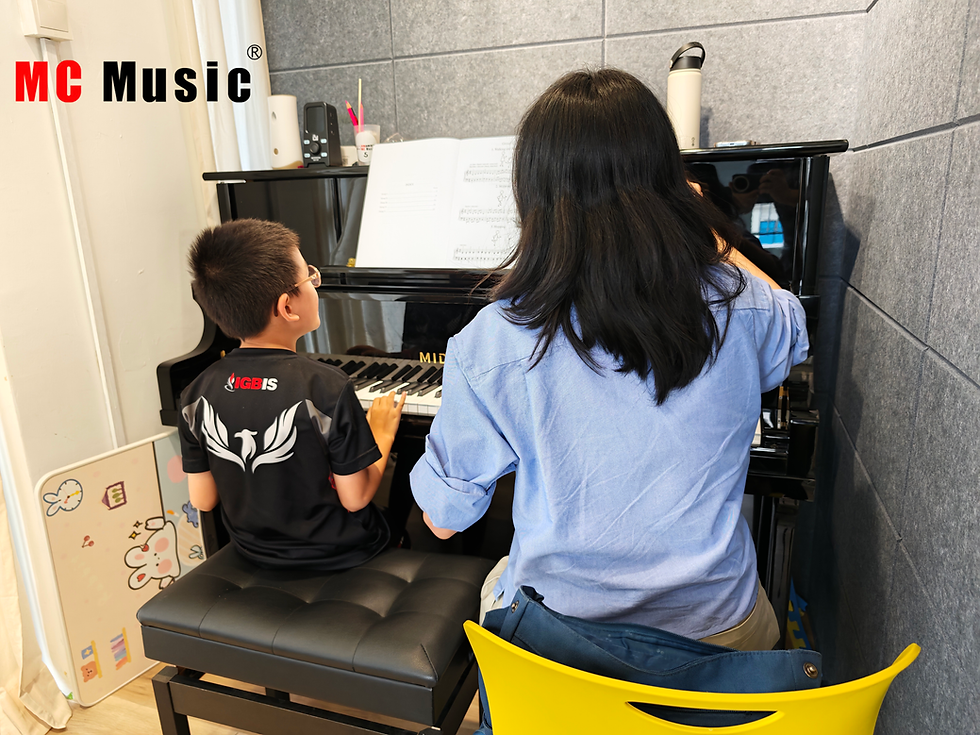
Piano is often one of the most practical first instruments for young children. The layout is visual and logical: keys move from low to high, patterns repeat, and a child can create a clear sound by pressing a key. That immediate reward helps beginners stay engaged.
Piano also introduces several core musical skills at once. Children learn rhythm, pitch, basic note reading, hand coordination, and listening. Because they can play melody and accompaniment on one instrument, they begin to understand how music fits together rather than only copying individual notes.
For children around ages 4 to 6, lessons should be especially playful and paced appropriately. They may learn through colored cues, musical stories, simple patterns, and singing before they are expected to read standard notation in detail. As their concentration and coordination grow, they can move into more structured repertoire and exam preparation if that suits their goals.
Piano may be less appealing for a child who needs to move constantly or is mainly excited by loud, energetic rhythm. That does not mean they cannot learn piano well. It simply means the lesson approach should include active rhythm games and varied activities to keep them involved.
Drums: Excellent for Active Children With a Strong Beat
Some children hear music with their whole body. They clap accurately, march to the beat, tap on every surface, and light up when a song has a strong groove. For them, drums can be a wonderful starting point.
Drum lessons develop timing, coordination, concentration, and controlled movement. Young students learn that drumming is more than hitting loudly. They practice starting and stopping together, counting beats, following patterns, and using both hands and feet with purpose. These skills can be deeply satisfying for children who enjoy physical learning.
Drums are especially helpful for children who find it difficult to sit still for long periods. The energy of the instrument gives them an appropriate outlet while still asking for discipline. They must listen carefully, wait for cues, and repeat patterns accurately.
There are trade-offs. A child needs to be comfortable with sound and able to follow safety guidance about listening at sensible volumes. They also need a teacher who emphasizes control, posture, and musicality from the beginning. When those foundations are in place, drums can build confidence very quickly.
Guitar: Great for Patient, Song-Loving Beginners
Guitar has a special appeal because children recognize it in so many songs. It feels social, expressive, and connected to the music they already enjoy. A young beginner can learn simple rhythms and familiar melodies, then gradually build toward chords and more independent playing.
However, guitar can be physically demanding for very young children. Pressing strings cleanly takes finger strength, and coordinating both hands can feel awkward at first. Children who are a little older, or who have the patience to work through those early challenges, often do very well.
Guitar may be a good match for a child who loves singing along, enjoys pop or rock music, and is motivated by the idea of playing songs for family and friends. The key is setting realistic early expectations. The first few lessons are about comfort, rhythm, and basic technique, not instantly playing every favorite song.
For a child who becomes discouraged when results are not immediate, piano or drums may offer a more accessible first experience. But with encouraging instruction and suitable goals, guitar can become a lasting creative outlet.
Voice: A Natural Choice for Children Who Love to Sing
Voice is the most personal instrument a child has. Many young children sing spontaneously before they ever consider formal lessons. For a child who is constantly making up lyrics, performing for relatives, or singing along with every soundtrack, vocal lessons can channel that enthusiasm into useful skills.
Good beginner voice instruction focuses on healthy habits, listening, rhythm, breathing, pitch matching, and confident expression. Young learners should never be pushed to sing beyond what is comfortable for their developing voices. The emphasis should be on freedom, accuracy, and enjoyment.
Voice can also be a strong choice for children who are hesitant about an instrument but eager to participate in music. Singing helps them build musical awareness that can later support piano, guitar, or drums. It is particularly valuable for children who enjoy storytelling and connecting emotionally with a song.
Because the voice changes as a child grows, lessons need to be guided by an experienced instructor who understands age-appropriate repertoire and technique. The right environment helps children perform with confidence without making them feel exposed or judged.
Do Not Overlook Percussion and Musical Play
For very young children, especially those around age 3, an immediate commitment to one formal instrument may not be necessary. Musical play with hand drums, shakers, bells, clapping, movement, and singing can develop the skills that make later lessons easier.
These activities teach beat awareness, turn-taking, listening, coordination, and the connection between sound and movement. They also let parents and teachers observe what naturally captures a child’s attention. A child who keeps returning to rhythm may thrive with drums later, while one who carefully follows melodies may be ready for piano or voice instruction.
This early stage is not wasted time. It is preparation. Children who first experience music as something joyful and understandable are often more willing to stay with formal learning when they are ready.
What Matters More Than the Instrument
Parents sometimes worry that choosing the “wrong” instrument will set their child back. In most cases, the first choice is not permanent. Children can change directions as their interests, coordination, and confidence develop. What matters more is whether they have a teacher who notices their strengths and keeps the learning experience positive.
Look for lessons with a clear path forward. A child should have small goals they can reach, opportunities to share what they have learned, and feedback that is specific and kind. Enjoyment and standards belong together. When children learn correct habits while celebrating real progress, they are more likely to stay motivated.
At MC Music Malaysia, young learners can explore piano, drums, guitar, and voice with instructors who balance encouragement with structured skill development. For families who value visible progress, regular lessons and performance opportunities can turn a child’s first curiosity into a meaningful long-term habit.
The best first instrument is the one that gives your child a reason to come back next week. Listen to what excites them, allow room for growth, and let a supportive teacher help turn those first sounds into music they are proud to make.


Comments