
Piano Lesson Curriculum Review for Parents

A piano lesson curriculum review should look beyond the method book a child brings home each week. A good curriculum gives students a clear path forward, but it also leaves room for personality, changing interests, and the small wins that keep music enjoyable. For parents, the real question is not simply, “What will my child learn next?” It is, “Will this program help my child grow with confidence and want to continue learning?”
For teenagers and adults, the same principle applies. Some learners want to play favorite songs, some want to improve their reading, and others want a formal framework that may include graded examinations. The strongest piano curriculum recognizes these goals while building the foundations that make long-term progress possible.
What a Piano Lesson Curriculum Should Include
A thoughtful curriculum is more than a sequence of songs. It connects the skills students need at the keyboard: posture and hand position, rhythm, note reading, listening, technique, musical expression, and repertoire. These areas develop together over time.
In the early stages, a student may learn how to sit comfortably, recognize patterns on the keyboard, keep a steady beat, and play short pieces with both hands. These first lessons can seem simple, but they shape future habits. When children understand rhythm and keyboard geography from the beginning, they can approach new music with less frustration later on.
As students progress, the curriculum should gradually introduce broader musical ideas. This may include scales and chords, phrasing, dynamics, articulation, sight-reading, ear training, and different musical styles. A student should not be rushed through every topic at the same speed. Some may read fluently but need more time to coordinate both hands. Others may have a natural ear and benefit from more focused reading practice.
The aim is not to check off topics quickly. It is to help each learner understand what they are playing and develop the ability to make music independently.
Structure Matters, but Flexibility Matters Too
Parents sometimes hear “structured curriculum” and imagine a rigid set of exercises with little room for enjoyment. In reality, structure can be reassuring when it is used well. It gives teachers a way to identify what a student has learned, what needs reinforcement, and what should come next.
At the same time, a curriculum should not make every student follow an identical route. A shy child who loves film music may become more engaged when familiar melodies are included alongside foundational pieces. A highly motivated student may enjoy an additional challenge, while a younger beginner may need more repetition before moving on.
This balance is especially valuable for children. They need enough consistency to build discipline, but they also need lessons that feel achievable and encouraging. When students experience steady progress, they are more likely to practice willingly and see themselves as musicians rather than simply children completing an activity.
The role of repertoire
Repertoire is the music a student learns to perform. It is often the most visible part of a piano program, yet it should serve more than one purpose. Well-chosen pieces give students opportunities to apply new skills, strengthen coordination, explore musical expression, and develop a sense of accomplishment.
A varied selection of music can also keep learning fresh. Classical pieces may support reading and technique, while popular, contemporary, or familiar songs can motivate students and help them connect piano playing with the music they enjoy outside lessons. The right mix depends on the learner’s age, level, and goals.
How to Evaluate Progress Without Creating Pressure
Visible progress matters, but it does not always appear as a dramatic jump from one song level to another. A child who keeps a steadier beat, corrects a mistake independently, plays with more relaxed hands, or feels brave enough to perform for family is making real musical progress.
A useful curriculum gives teachers clear ways to observe those changes. Regular feedback should help students understand what they did well and what they can work on next. For parents, this may mean hearing a teacher explain the purpose behind an exercise or receiving guidance on how to support practice at home.
Progress is most sustainable when students feel safe making mistakes. Piano learning involves trial, repetition, and occasional frustration. An encouraging teacher does not remove every challenge, but helps the student work through it in manageable steps. That approach builds resilience as well as musical skill.
Formal assessments and graded examinations can be meaningful milestones for students who want them. They can provide focus, repertoire goals, and an opportunity to celebrate preparation. However, examinations should support a student’s development, not define it. A curriculum should also value playing for enjoyment, sharing music with others, and building a lifelong relationship with the instrument.
Questions to Ask During a Piano Lesson Curriculum Review
When considering a piano program, it helps to ask how the curriculum is adapted for different learners. A school should be able to explain how beginners are introduced to reading and technique, how students move forward when they are ready, and how teachers respond when a student needs more time.
Ask how lessons include both practical playing and musical understanding. Playing songs is rewarding, but students also benefit from learning rhythm, listening carefully, recognizing patterns, and understanding how music is put together. These skills make it easier to learn new pieces in the future.
It is also worth asking how creativity is included. Creativity does not have to mean advanced composition. For a young beginner, it may be clapping a rhythm, choosing dynamics for a piece, or experimenting with sounds at the keyboard. For an older learner, it may involve improvising with chords or arranging a familiar melody. These experiences help students see music as a form of expression, not just a set of correct notes.
Finally, consider communication. Parents should feel comfortable asking about goals, practice expectations, and their child’s development. Adult students deserve the same clarity. A curriculum works best when teacher, student, and family, where appropriate, understand what they are working toward together.
Practice Should Support Learning at Home
Even the most carefully planned lesson needs gentle support between sessions. For young children, short and regular practice is usually more effective than one long session at the end of the week. A clear assignment helps families know where to begin: perhaps a few lines of a piece, a rhythm activity, or a scale practiced slowly with relaxed hands.
The focus should be on consistency and attention rather than perfection. Parents do not need to become piano teachers at home. They can create a calm routine, notice effort, and encourage their child to show what they have learned. A positive response after a difficult practice session can make a meaningful difference.
Older students and adults may benefit from setting their own practice goals. Some weeks will be busier than others, and that is normal. The key is returning to the instrument with a clear next step instead of judging progress by comparison with someone else.
A Curriculum Should Help Students Feel Musical
The best piano education combines direction with discovery. Students need technique so they can play comfortably, reading skills so they can approach unfamiliar music, and rhythm so they can play with confidence. They also need opportunities to listen, express emotion, and feel proud of the sound they create.
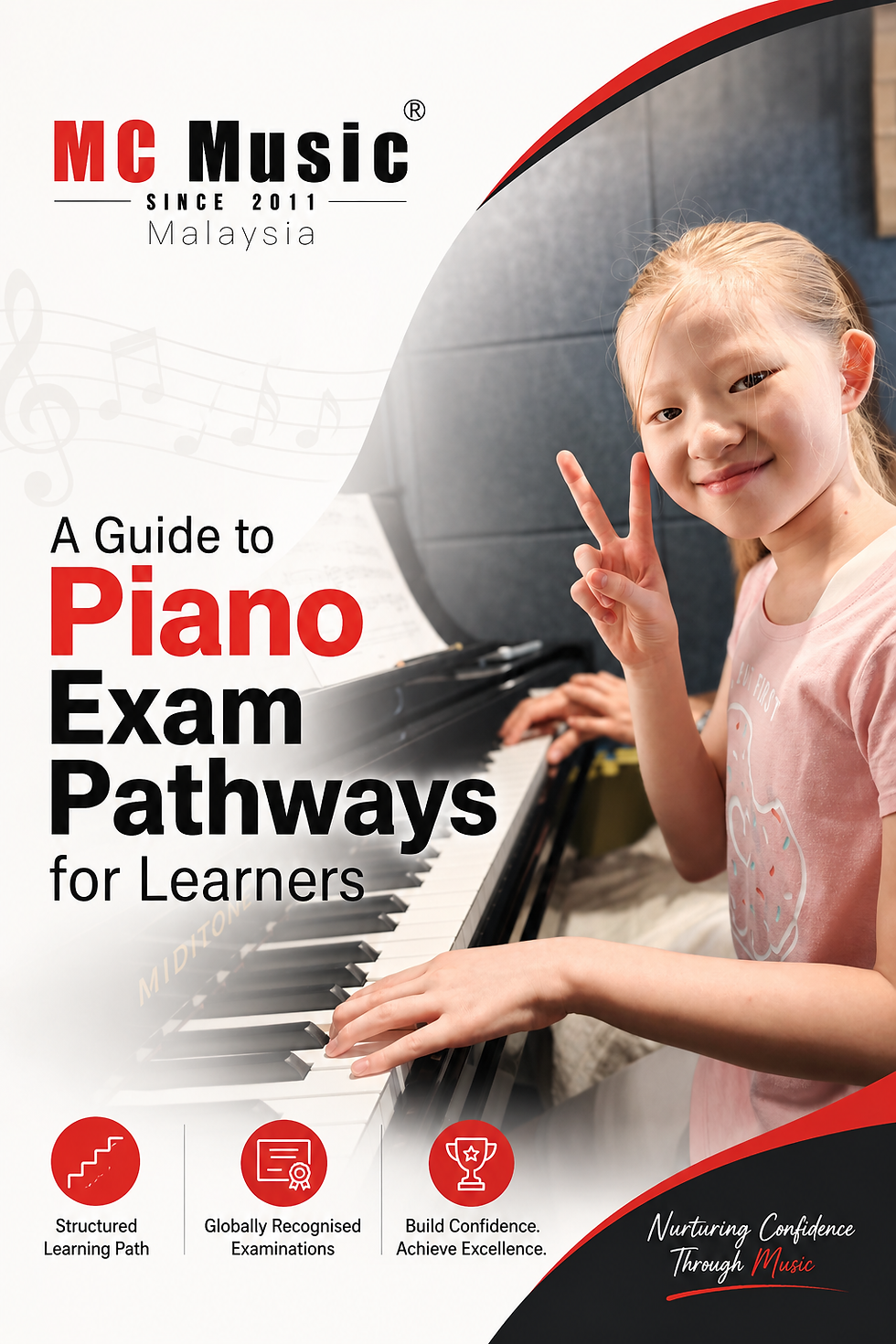
At MC Music Malaysia, one-to-one piano lessons can be shaped around each student’s age, experience, pace, and goals while maintaining the structure needed for meaningful development. That personal attention is particularly helpful when a child’s motivation changes or an adult returns to piano after years away.
A curriculum is successful when it gives learners more than the next piece to finish. It should give them the confidence to sit at the piano, try something new, and recognize that their own musical voice is worth developing.


Comments